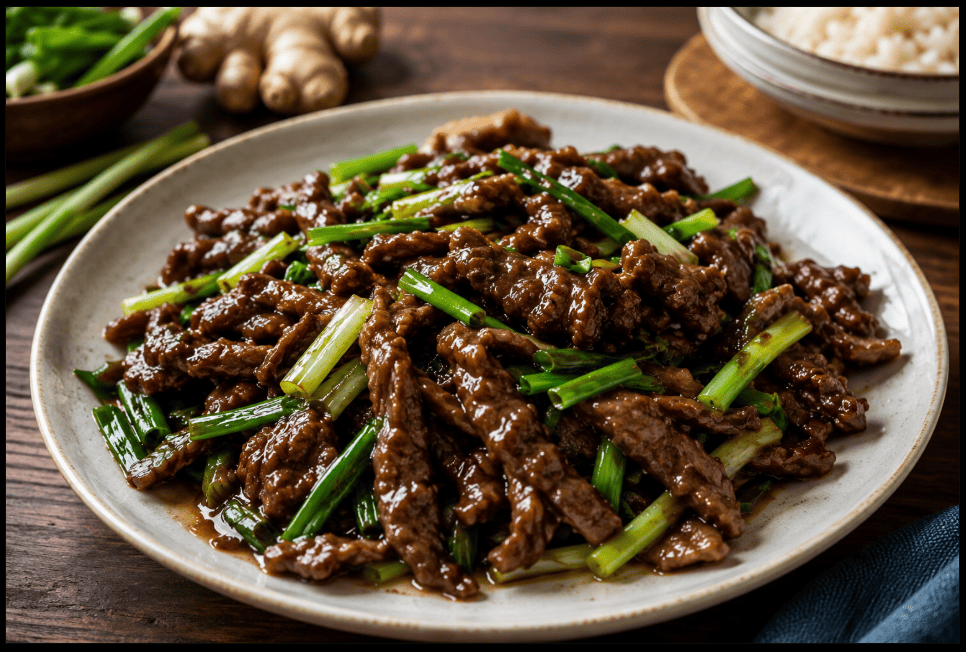
Mongolian Beef Recipe: Better Than Takeout and Ready in Under 30 Minutes
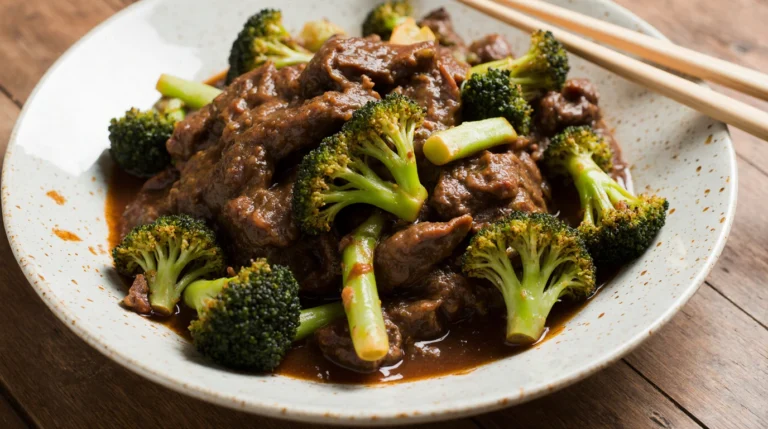
Craving a takeout favorite that’s simple enough to make in your own kitchen? This mongolian beef recipe brings together tender strips of beef and a rich, glossy sauce made with soy sauce, brown sugar, garlic, and fresh ginger. Every bite delivers the perfect balance of sweet and savory flavors, making it a satisfying meal that’s sure to become a family favorite.
One of the best things about this recipe is how quickly it comes together. Whether you’re preparing a weeknight family dinner, hosting friends, or simply craving your favorite takeout meal, this homemade version delivers all the bold flavors you love without the extra cost or waiting time. Served over steamed rice or noodles, it’s a satisfying meal that never disappoints.
Table of Contents
Ingredients
For the Beef:
- 1 pound flank steak, thinly sliced against the grain
- ¼ cup cornstarch
- 2 tablespoons vegetable oil
For the Sauce:
- ½ cup low-sodium soy sauce
- ⅓ cup brown sugar
- ½ cup water
- 1 tablespoon hoisin sauce
- 3 cloves garlic, minced
- 1 tablespoon fresh ginger, grated
- 1 teaspoon sesame oil
For Garnish:
- 4 green onions, sliced into 1-inch pieces
- 1 tablespoon sesame seeds (optional)
For Serving:
- Steamed white rice
- Cooked noodles (optional)
Ingredient Spotlight
Flank Steak
Flank steak is a fantastic choice for this mongolian beef recipe because it becomes incredibly tender when sliced thinly against the grain. It’s also a good source of protein, iron, and vitamin B12.
Ginger
Fresh ginger adds warmth and depth to the sauce while providing natural antioxidants that contribute to its distinctive flavor.
How to Make Mongolian Beef Recipe
Step 1: Prepare the Beef
Place the thinly sliced flank steak in a bowl and sprinkle the cornstarch evenly over the meat.
Toss until every piece is lightly coated. Let the beef sit for about 10 minutes. This coating helps create the signature texture while also thickening the sauce later.
Step 2: Make the Sauce
In a medium bowl, whisk together:
- Soy sauce
- Brown sugar
- Water
- Hoisin sauce
- Garlic
- Ginger
- Sesame oil
Continue whisking until the sugar dissolves completely.
Step 3: Cook the Beef
Heat the vegetable oil in a large skillet or wok over medium-high heat.
Once the oil is hot, add the beef in a single layer. Avoid overcrowding the pan. Cook in batches if necessary.
Sear the beef for 2 to 3 minutes per side until lightly browned and crispy around the edges.
Transfer the cooked beef to a plate.
Step 4: Cook the Aromatics
If needed, add a small splash of oil to the skillet.
Add the garlic and ginger and cook for about 30 seconds until fragrant. Be careful not to burn them, as they can become bitter.
Step 5: Add the Sauce
Pour the prepared sauce into the skillet.
Bring it to a gentle simmer and cook for 2 to 3 minutes, stirring occasionally.
The sauce will begin to thicken naturally.
Step 6: Return the Beef
Add the cooked beef back into the skillet.
Toss everything together so the sauce coats every piece evenly.
Cook for another 2 minutes until the beef is heated through and the sauce reaches a glossy consistency.
Step 7: Add Green Onions
Stir in the sliced green onions.
Cook for 30 to 60 seconds, just until slightly softened while still retaining some freshness and crunch.
Step 8: Serve
Transfer the beef to a serving dish.
Sprinkle with sesame seeds if desired and serve immediately over steamed rice or noodles.
Expert Tips
Making a great mongolian beef recipe is simple, but these tips can help elevate the dish:
- Freeze the steak for 20 minutes before slicing for cleaner, thinner cuts.
- Always slice against the grain for maximum tenderness.
- Use fresh ginger instead of powdered ginger for the best flavor.
- Cook the beef in batches to ensure proper browning.
- Don’t overcook the beef, as it can become tough.
- Taste the sauce before adding it to the pan and adjust sweetness if desired.
- Use a wok if available for authentic stir-fry results.
Variations and Substitutions
This mongolian beef recipe is easy to customize based on your preferences and dietary needs.
Use Different Cuts of Beef
You can substitute flank steak with:
- Sirloin steak
- Skirt steak
- Flat iron steak
- Ribeye steak
Make It Spicy
Add:
- ½ teaspoon red pepper flakes
- Sliced fresh chili peppers
- A drizzle of chili oil
Add Vegetables
Boost nutrition and color by including:
- Broccoli florets
- Bell peppers
- Snow peas
- Mushrooms
- Carrots
Gluten-Free Version
Replace:
- Regular soy sauce with gluten-free tamari
- Hoisin sauce with a gluten-free alternative
Lower-Sugar Option
Reduce the brown sugar by half or use a sugar substitute designed for cooking.
Chicken Mongolian Style
Swap the beef for thinly sliced chicken breast or boneless chicken thighs.
Storage Tips
Refrigerator
Store leftovers in an airtight container for up to 4 days.
Allow the dish to cool completely before refrigerating.
Freezer
Freeze cooked Mongolian beef in a freezer-safe container for up to 3 months.
Label the container with the date for easy tracking.
Reheating
For best results:
- Reheat in a skillet over medium heat.
- Add a splash of water if the sauce becomes too thick.
- Microwave in 30-second intervals until heated through.
Common Mistakes to Avoid
Even a simple mongolian beef recipe can go wrong if a few important details are overlooked.
Slicing the Beef Too Thick
Thin slices cook quickly and absorb more flavor. Thick pieces may become chewy.
Skipping the Cornstarch
The cornstarch coating creates the classic texture and helps the sauce cling to the meat.
Overcrowding the Pan
Too much beef at once causes steaming rather than searing.
Burning the Garlic
Garlic cooks quickly. Burnt garlic can give the entire dish a bitter taste.
Overcooking the Beef
Beef continues cooking slightly after being removed from heat. Avoid leaving it in the pan too long.
Using Too Much Soy Sauce
An excess amount can make the dish overly salty and overpower the other flavors.
Not Tasting the Sauce
Always taste and adjust sweetness, saltiness, or spice levels before finishing the dish.
Frequently Asked Questions (FAQ)
What is Mongolian beef made of?
Mongolian beef is typically made with thinly sliced flank steak cooked in a sweet and savory sauce consisting of soy sauce, brown sugar, garlic, ginger, and green onions.
Is Mongolian beef actually from Mongolia?
No. Despite its name, Mongolian beef is not a traditional Mongolian dish. It is commonly associated with Chinese-American cuisine and became popular in North American restaurants.
What cut of beef works best for this mongolian beef recipe?
Flank steak is the most popular choice because it’s flavorful and tender when sliced thinly against the grain. Sirloin and skirt steak are also excellent alternatives.
Can I make this recipe ahead of time?
Yes. You can prepare the sauce and slice the beef up to a day in advance. Store them separately in the refrigerator until ready to cook.
Why is my Mongolian beef tough?
The most common causes are slicing the beef incorrectly, using overly thick slices, or overcooking the meat.
Can I add vegetables to this recipe?
Absolutely. Broccoli, carrots, snow peas, mushrooms, and bell peppers all pair wonderfully with Mongolian beef.
How spicy is Mongolian beef?
Traditional Mongolian beef is generally mild and focuses on sweet and savory flavors. However, you can easily add chili flakes or fresh peppers for extra heat.
What should I serve with Mongolian beef?
Popular side dishes include:
- Steamed jasmine rice
- Fried rice
- Lo mein noodles
- Stir-fried vegetables
- Asian cucumber salad
Conclusion
This mongolian beef recipe is the perfect combination of tender beef, rich savory sauce, and just the right touch of sweetness. It’s quick enough for busy weeknights yet impressive enough for special occasions, making it a versatile meal you’ll want to keep in your regular dinner rotation.
Once you try this homemade mongolian beef recipe, you may never feel the need to order takeout again. Gather your ingredients, fire up your skillet, and enjoy a delicious restaurant-style meal right from your own kitchen. Don’t forget to share it with family and friends and let them know how much you loved it!