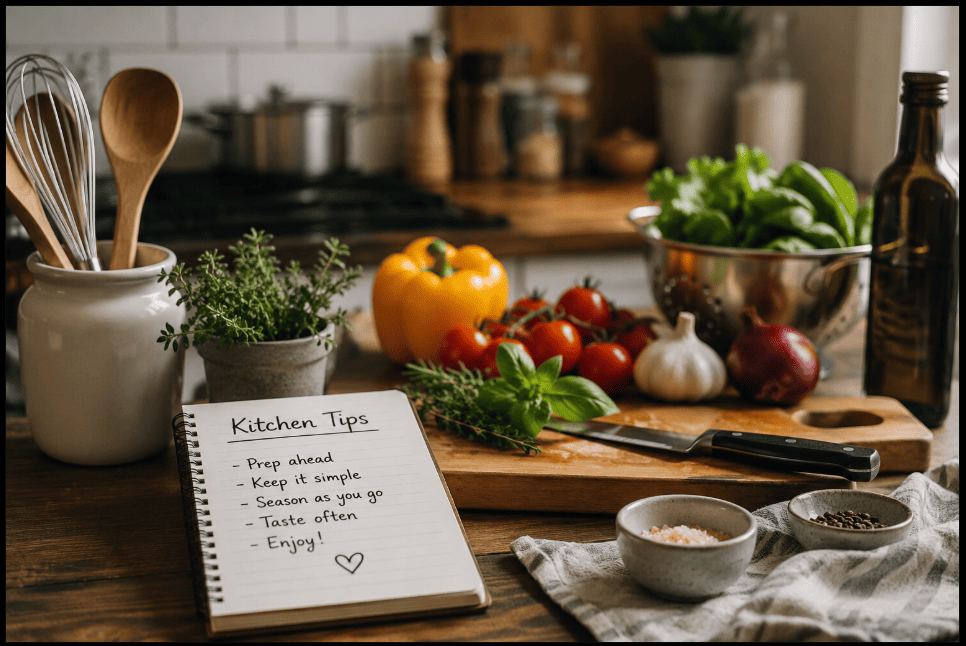
Essential Kitchen Tips Every Beginner Should Know (Complete Beginner’s Guide)
Everyone starts somewhere in the kitchen.
I still remember my first attempts at cooking. I burned garlic because I thought darker meant more flavor. I overcrowded pans until vegetables became soggy instead of beautifully browned. I cut onions with a dull knife and wondered why cooking felt exhausting.
The truth is that becoming a good cook isn’t about buying expensive cookware or following complicated recipes. It’s about learning a handful of fundamental habits that make every meal easier, safer, and more delicious.
Over the years, I realized that professional cooks don’t necessarily know thousands of recipes—they simply master the basics. These small techniques save time, reduce waste, improve flavor, and make cooking far more enjoyable.
In this guide, I’ll share the Essential Kitchen Tips I wish someone had taught me when I first started cooking. These aren’t just random suggestions copied from the internet. They’re practical lessons learned through experience, mistakes, and countless hours spent preparing meals.
Whether you’re cooking your first dinner or trying to become more confident in the kitchen, these tips will help you build a solid foundation.
Table of Contents
Why Essential Kitchen Tips Matter
Many beginners believe that cooking is difficult because recipes are complicated.
In reality, recipes often fail because beginners miss the little details.
Professional chefs rarely struggle because they’ve developed good kitchen habits. They organize their ingredients, understand heat control, choose the right tools, and know when to be patient.
Learning these habits early will help you:
- Cook with more confidence
- Avoid common beginner mistakes
- Save money on ingredients
- Reduce kitchen accidents
- Improve food flavor naturally
- Make cooking faster and less stressful
Think of these Essential Kitchen Tips as building blocks. Once they become second nature, almost every recipe becomes easier.
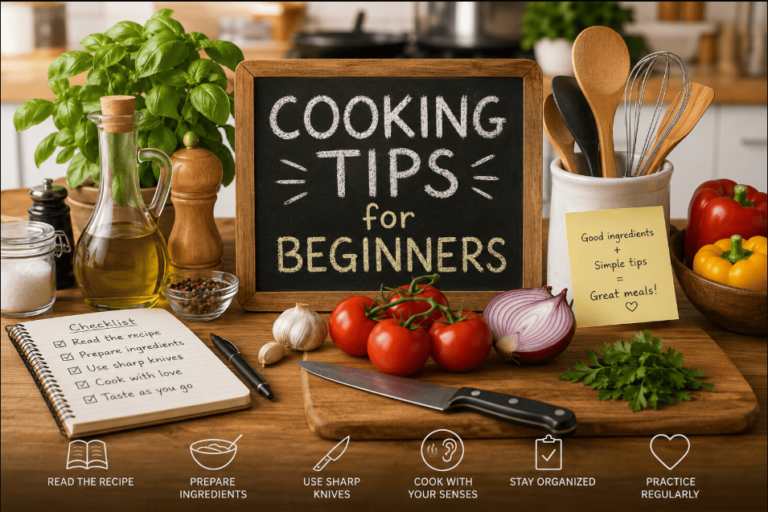
1. Read the Entire Recipe Before You Start
This sounds obvious, but it’s one of the biggest mistakes beginners make.
Many people begin cooking after reading only the ingredient list. Then halfway through they discover the chicken should have been marinated for two hours or the oven should have been preheated twenty minutes earlier.
Professional cooks always read everything first.
Take a few minutes to understand:
- Ingredients
- Cooking times
- Required equipment
- Preparation steps
- Special instructions
Doing this prevents surprises and helps you work calmly instead of rushing.
2. Prepare Everything Before Turning on the Heat
Professional kitchens call this mise en place, but you don’t need fancy French words to benefit from the habit.
Wash vegetables.
Measure spices.
Cut the meat.
Open cans.
Prepare sauces.
Only after everything is ready should you begin cooking.
This simple routine prevents burnt food and forgotten ingredients.
3. Keep Your Workspace Organized
Cooking in a messy kitchen creates unnecessary stress.
Instead of leaving bowls, wrappers, and vegetable peels everywhere, clean as you go.
Whenever something is no longer needed:
- Throw it away.
- Wash it.
- Put it back.
A clean workspace helps you focus on cooking rather than searching for utensils under piles of dishes.
One of the best Essential Kitchen Tips I ever learned was that a tidy kitchen actually makes cooking feel easier.
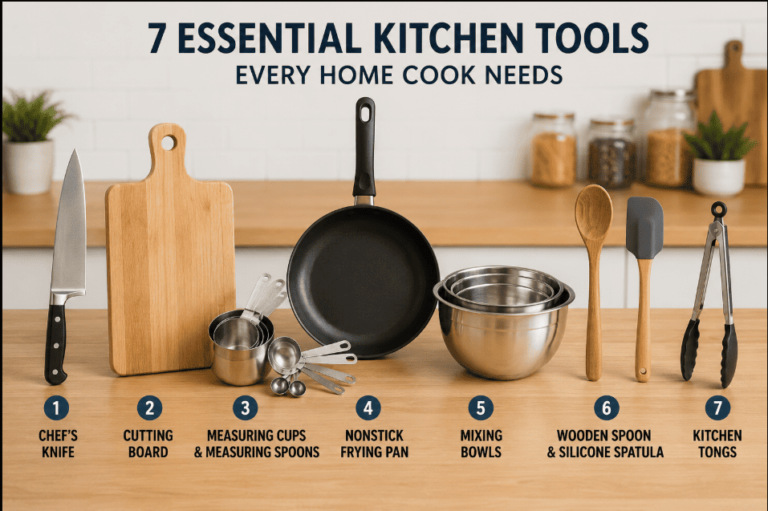
4. Invest in One Good Chef’s Knife
Many beginners believe they need dozens of expensive knives.
You don’t.
A single high-quality chef’s knife can handle almost every kitchen task.
Use it for:
- Vegetables
- Herbs
- Meat
- Fruit
- Garlic
- Nuts
More importantly, keep it sharp.
Ironically, dull knives cause more injuries because they require extra force and are more likely to slip.
A sharp knife is safer, faster, and more enjoyable to use.
5. Learn Basic Knife Skills
Fancy knife tricks aren’t necessary.
Focus on consistency.
When vegetables are cut into similar sizes, they cook evenly.
Large chunks take longer.
Tiny pieces cook quickly.
If they’re mixed together, some food burns while other pieces remain undercooked.
Practice:
- Slicing
- Dicing
- Chopping
- Mincing
Speed comes naturally with practice.
Accuracy comes first.
6. Always Preheat Your Pan
One mistake I made for years was adding food to a cold pan.
The result?
Food stuck.
Meat steamed.
Vegetables released water.
Nothing browned properly.
Allow your pan to heat for a minute or two before adding oil.
Then wait another few seconds before adding food.
This simple habit dramatically improves texture and flavor.
7. Don’t Be Afraid of Salt, Use It Correctly
Many beginners either oversalt food or avoid salt altogether.
Salt isn’t just about making food salty.
It enhances natural flavors.
Season gradually.
Taste.
Adjust.
Taste again.
Remember that ingredients like cheese, soy sauce, broth, and bacon already contain salt.
One of the smartest Essential Kitchen Tips is learning to season throughout cooking instead of dumping all the salt in at the end.
8. Taste Your Food Frequently
Recipes provide guidelines.
Your taste buds make the final decision.
Professional chefs taste constantly.
Ask yourself:
- Does it need more acidity?
- More salt?
- More herbs?
- More sweetness?
- More cooking time?
Every ingredient is slightly different, so tasting helps you adapt instead of blindly following instructions.
9. Understand Heat Levels
Heat is one of the least understood parts of cooking.
Beginners often assume high heat cooks everything faster.
Sometimes it simply burns the outside.
Learn when to use:
High Heat
- Searing steak
- Stir-frying
- Boiling water
Medium Heat
- Most everyday cooking
- Pancakes
- Chicken
- Vegetables
Low Heat
- Simmering soups
- Cooking sauces
- Melting butter
- Slow cooking
Mastering heat control instantly improves your cooking.
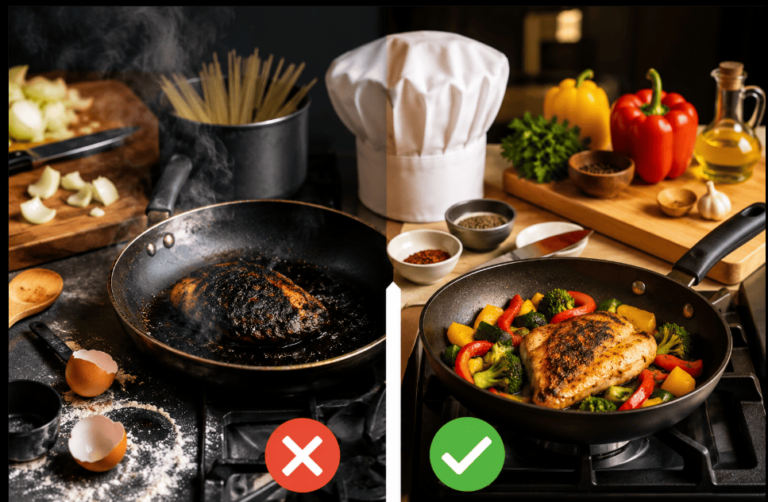
10. Don’t Overcrowd the Pan
This lesson changed the way I cooked forever.
When too much food goes into one pan, moisture becomes trapped.
Instead of browning, everything starts steaming.
If you’re cooking meat or vegetables, leave space between pieces.
Cook in batches if necessary.
Although it takes a little longer, the results are dramatically better.
Beautiful color means better flavor.
11. Let Meat Rest Before Cutting
Cutting meat immediately after cooking causes all the juices to spill onto the cutting board.
Instead, let it rest.
Small cuts need around five minutes.
Larger roasts need longer.
The juices redistribute throughout the meat, making every bite more tender and flavorful.
This simple habit separates average cooking from excellent cooking.
12. Use Fresh Herbs at the Right Time
Fresh herbs lose flavor if cooked too long.
Hard herbs like rosemary and thyme can handle longer cooking.
Delicate herbs like parsley, cilantro, basil, and dill should usually be added near the end.
Learning this small difference keeps herbs vibrant instead of dull.
Final Thoughts of Essential Kitchen Tips
Nobody becomes an excellent cook overnight.
Every experienced home cook has burned dinners, overcooked chicken, forgotten ingredients, and made recipes that didn’t turn out as expected.
The difference is that each mistake teaches something valuable.
Start by practicing these Essential Kitchen Tips one at a time rather than trying to master everything in a single day. Soon, chopping vegetables will feel natural, seasoning will become instinctive, and cooking will be far less intimidating.
Remember, great cooking isn’t about perfection. It’s about building smart habits that make every meal a little better than the last.
13. Keep Your Knives Sharp
It may sound surprising, but a sharp knife is much safer than a dull one.
When a knife loses its edge, you have to press harder to cut through food. That extra force increases the chance of the blade slipping and causing an injury.
You don’t need professional sharpening equipment. A simple knife sharpener used regularly can keep your blade in good condition.
A sharp knife also makes food look better. Tomatoes slice cleanly, herbs stay fresh instead of bruised, and onions are easier to dice evenly.
Among all the Essential Kitchen Tips, this one improves both safety and cooking efficiency.
14. Learn the Difference Between Chopping, Dicing, and Mincing
Recipes use different cutting terms for a reason.
- Chopping creates larger, rustic pieces.
- Dicing produces small, evenly sized cubes.
- Mincing creates tiny pieces, usually for garlic, ginger, or herbs.
Each cut changes how quickly ingredients cook and how their flavors spread throughout the dish.
If garlic is minced, its flavor becomes stronger because more surface area is exposed. Larger chopped pieces create a milder taste.
Understanding these differences helps you follow recipes more accurately while giving you greater control over flavor.
15. Keep Raw Meat Separate from Other Ingredients
Food safety is just as important as flavor.
Always use separate cutting boards when possible.
If you prepare raw chicken first, wash the knife, cutting board, and your hands thoroughly before cutting vegetables or fruit.
Cross-contamination is one of the most common mistakes beginners make.
A few extra minutes spent cleaning can prevent foodborne illness.
16. Dry Meat Before Cooking
This tip surprised me when I first learned it.
If meat is covered with moisture, it won’t brown properly.
Instead, it steams.
Before cooking steaks, chicken breasts, pork chops, or fish, gently pat them dry using paper towels.
Then season and cook.
The difference is remarkable.
You’ll get a beautiful golden crust instead of pale, watery meat.
17. Let the Pan Do the Work
One habit many beginners have is constantly moving food around.
When meat first touches a hot pan, leave it alone.
If you keep flipping it every few seconds, it never develops that flavorful brown crust.
The same applies to mushrooms and vegetables.
Give food time to caramelize before turning it.
Patience creates better flavor.
18. Use the Right Pan for the Job
Every pan has a purpose.
- Non-stick pans work well for eggs and pancakes.
- Stainless steel pans create excellent browning.
- Cast iron skillets retain heat beautifully for steaks and roasting.
- Saucepans are ideal for soups and sauces.
Using the correct cookware often makes cooking easier than changing the recipe itself.
19. Learn How to Store Fresh Herbs
Fresh herbs are expensive, and many beginners throw away half of what they buy.
To keep herbs fresh longer:
- Trim the stems.
- Place them in a glass with a little water.
- Cover loosely with a plastic bag if needed.
- Refrigerate delicate herbs like cilantro and parsley.
- Keep basil at room temperature.
Proper storage can extend freshness by several days.
20. Keep Your Pantry Organized
An organized pantry saves time and money.
Group similar ingredients together.
For example:
- Baking ingredients
- Pasta and rice
- Oils and vinegar
- Canned foods
- Spices
- Snacks
Label containers whenever possible.
You’ll know exactly what you have before shopping, reducing food waste.
This is one of those Essential Kitchen Tips that pays off every single week.
21. Label Leftovers
Almost everyone has opened a container in the refrigerator and wondered:
“How long has this been here?”
Use masking tape or labels to write the date.
Try to eat leftovers within a few days.
This habit reduces waste while helping you avoid spoiled food.
22. Learn Basic Food Storage
Proper storage preserves freshness.
Here are a few simple rules:
- Store onions and potatoes separately.
- Keep tomatoes at room temperature.
- Refrigerate dairy products promptly.
- Freeze meat if you won’t use it within a couple of days.
- Store dry goods in airtight containers.
Knowing where food belongs keeps ingredients tasting their best.
23. Don’t Ignore Carryover Cooking
Food continues cooking after leaving the heat.
This is called carryover cooking.
Large cuts of meat can rise several degrees internally while resting.
If you cook chicken or steak until it reaches your exact target temperature in the pan, it may become overcooked by the time you serve it.
Removing food slightly early often gives better final results.
24. Buy an Instant-Read Thermometer
Guessing whether meat is fully cooked isn’t always reliable.
A digital thermometer removes the uncertainty.
It’s one of the least expensive kitchen tools yet one of the most useful.
You’ll avoid:
- Undercooked chicken
- Dry pork
- Overcooked steak
Professionals rely on thermometers because accuracy matters.
25. Taste Ingredients Individually
When trying a new spice or vegetable, taste a small amount on its own first.
Understanding individual flavors helps you build balanced dishes later.
Ask yourself:
- Is it sweet?
- Bitter?
- Acidic?
- Earthy?
- Spicy?
Experienced cooks know ingredients before combining them.
26. Balance Flavors Instead of Adding More Salt
Sometimes food tastes flat even after adding salt.
The missing element might be acidity instead.
A squeeze of lemon juice or a splash of vinegar can brighten an entire dish.
Likewise, if tomato sauce tastes too acidic, a tiny pinch of sugar may help balance it.
Learning flavor balance is one of the most valuable Essential Kitchen Tips because it teaches you to fix recipes instead of starting over.
27. Save Vegetable Scraps for Homemade Stock
Don’t throw away every peel and stem.
Keep clean scraps like:
- Onion skins
- Carrot peels
- Celery tops
- Mushroom stems
- Herb stems
Freeze them in a container until you have enough to make homemade vegetable stock.
It’s economical, flavorful, and reduces food waste.
28. Measure When Baking, Estimate When Cooking
Cooking allows flexibility.
Baking requires precision.
When baking cakes, cookies, or bread, measure ingredients carefully.
When making soups, stir-fries, or pasta sauces, feel free to adjust seasonings according to taste.
Understanding this difference saves beginners from many disappointing results.
29. Keep Learning One Technique at a Time
Don’t try to master every cuisine immediately.
Instead, focus on one new skill each week.
For example:
- Knife skills
- Roasting vegetables
- Making soups
- Cooking rice perfectly
- Pan-searing chicken
- Homemade salad dressings
Small improvements accumulate into impressive cooking abilities over time.
30. Enjoy the Process
Perhaps the most important lesson I’ve learned is this:
Cooking isn’t a race.
Some meals will fail.
You’ll occasionally burn toast, oversalt soup, or forget an ingredient.
That’s completely normal.
Every mistake teaches something valuable.
The best home cooks aren’t people who never make mistakes-they’re people who keep cooking despite them.
If you stay curious, practice consistently, and apply these Essential Kitchen Tips, your confidence will grow with every meal you prepare.
Common Beginner Kitchen Mistakes to Avoid
Even after learning good techniques, it’s easy to fall into habits that make cooking more difficult. Here are a few mistakes I still remind myself to avoid:
- Cooking everything on high heat.
- Skipping ingredient preparation.
- Using too much oil.
- Adding garlic too early and burning it.
- Forgetting to taste during cooking.
- Crowding the pan.
- Washing mushrooms under running water for too long.
- Cutting food into uneven sizes.
- Ignoring resting time for meat.
- Not cleaning as you cook.
Recognizing these habits early will help you improve much faster.
Final Thoughts
Every confident cook started exactly where you are now.
No one is born knowing how to season a soup, roast vegetables, or cook the perfect piece of chicken. Those skills come from repetition, curiosity, and a willingness to learn from small mistakes.
The good news is that you don’t need fancy equipment or years of culinary training to prepare delicious meals. By practicing these Essential Kitchen Tips, you’ll develop habits that make cooking easier, safer, and far more enjoyable.
Start with one or two tips today. Tomorrow, add another. Before long, you’ll notice that recipes feel less intimidating, your meals taste better, and your confidence in the kitchen grows naturally.
Remember, the best cooks aren’t the ones who never make mistakes—they’re the ones who keep learning every time they step into the kitchen. And that’s exactly how every great cooking journey begins.